Was Jonah dead or alive inside the belly of the whale?
The book of Jonah says that Jonah was swallowed by a big fish. He spent 3 days and 3 nights inside the fish’s belly before being vomited out by the fish.
Jonah 1:17 Now the LORD had prepared a great fish to swallow up Jonah. And Jonah was in the belly of the fish three days and three nights.
This story is one of the more well known stories of the old Testament. It’s storyline can be seen paralleled in many other stories such as Pinocchio where the father, Mr Geppetto is swallowed by the great whale, Monstro.
The most common understanding is that Jonah was alive inside the big fish for those 3 days and 3 nights. It was by a miracle of God that kept Jonah from dying in the fish’s belly. Of course, the character Mr Geppetto is also alive within the whale, although there is no reference to having been kept alive by God.
While it is the most common understanding, there are also those that hold to the belief that Jonah actually died and was then resurrected after the three days and three nights.
Some people do argue against the ability of Jonah to have remained alive within the belly of the whale saying that it would be literally impossible for a person to have remained alive for that long within the whale. In reality, this is not really an argument at all. If the story is true and there is a God who created the heavens and the earth, then it really isn’t much of a stretch to say that that God would be able to preserve a mans life within a whale. As far as biblical miracles go this would actually seem one of the easier to perform.
I certainly would not argue against Jonah having been alive for three days and three nights based on the impossibility of it happening without the need for supernatural intervention. Regardless of whether Jonah was dead or alive within the whale supernatural intervention is going to be required, either through the preservation of Jonah’s life or through the resurrection of it. Both scenarios require a miracle. It is arguably a greater miracle to resurrect someone from the dead than to stop them from dying.
So did Jonah remain alive or was he dead?
As far as I can ascertain there is no actual theological reason to believe that Jonah was indeed alive inside the fish’s belly, it just seems to be the more commonly accepted understanding.
There isn’t any specific verse that actually says that Jonah was dead or alive, but it seems to me that the main reason for the understanding that Jonah was alive is that Jonah “prayed” to God from inside the belly of the fish.
Jonah 2:1 Then Jonah prayed unto the LORD his God out of the fish’s belly,
If Jonah prayed then he must have been alive. Well, maybe, but maybe not.
It is my belief that Jonah actually died in the whale’s belly and was not alive for those 3 days. Although I don’t think that this issue is one that would change any doctrine and neither am I 100% dogmatic regarding the understanding, however, I do feel that the understanding that Jonah died fits better with the text and also makes more sense theologically.
Let’s start with the text itself. The book of Jonah is only 4 chapters long and it is in the 2nd chapter that we read about Jonah’s plight inside the great fish.
Jonah 2:1 Then Jonah prayed unto the LORD his God out of the fish’s belly,
2 And said, I cried by reason of mine affliction unto the LORD, and he heard me; out of the belly of hell cried I, and thou heardest my voice.
3For thou hadst cast me into the deep, in the midst of the seas; and the floods compassed me about: all thy billows and thy waves passed over me.
4 Then I said, I am cast out of thy sight; yet I will look again toward thy holy temple.
5The waters compassed me about, even to the soul: the depth closed me round about, the weeds were wrapped about my head.
6I went down to the bottoms of the mountains; the earth with her bars was about me for ever: yet hast thou brought up my life from corruption, O LORD my God.
7 When my soul fainted within me I remembered the LORD: and my prayer came in unto thee, into thine holy temple.
They that observe lying vanities forsake their own mercy.
9 But I will sacrifice unto thee with the voice of thanksgiving; I will pay that that I have vowed. Salvation is of the LORD.
10 And the LORD spake unto the fish, and it vomited out Jonah upon the dry land.
Jonah chapter 2 is Jonah recalling the event. Jonah’s prayer and descriptions are in the past tense. Jonah didn’t write the story while inside the fish’s belly obviously. Jonah is recollecting the event after it has happened.
Again, it has to be reiterated that it does not say that Jonah survived the 3 days and nights inside the big fish it simply says that he was inside the big fish for 3 days and nights.
In verse 1 the text clearly states that Jonah prays from inside the fish’s belly.
Belly in this verse is the Hebrew mim-mə-‘ê מִמְּעֵ֖י and means internal parts, internal organs.
Jonah was very clearly inside the whale at this time.
It must be noted that there is no time scale here, there is no reason to believe that Jonah didn’t pray this the second he reached the fish’s belly before he died. This is completely possible. There isn’t anything to say that he did do this but it is also possible that he did. Why would someone who was swallowed by a big fish wait hours or days before praying about it? So this prayer could easily have been prayed before Jonah died.
What also should be noticed, something I missed for a very long time, is that the Jonah did not get swallowed by the whale as soon as he went overboard into the sea. Jonah was in the sea for at least some time, enough that the sea engulfed him and that seaweed surrounded his head
The language “the bottoms of the mountains” gives the indication that Jonah was at the bottom of the sea.
The foundations of the mountains were believed to be below the earth that could be seen, often into the sea.
The reeds are found at the bottom of the sea. The Hebrew Sup is often translated as red sea, as it is the reed at the bottom of the red sea that gives it the redish tinge of colour.
It is however, much more likely that Jonah is not referring to a literal prayer but a metaphorical one.
In the second verse we see that Jonah prays not from the belly of the fish, although physically this is where he was, but from the belly of HELL. Belly here is the Hebrew mib-be-ṭen מִבֶּ֧טֶן womb, depths (the inner parts of anything ) These are two different Hebrew words and do not refer to the same “belly”, despite the KJV using the English belly in both occurrences.
Lets just take a look at another translation to show this distinction. The NASB shows that that the “belly” does not refer to the same place rendering the two different Hebrew words as stomach in Jonah 2:1 and depth in Jonah 2:2
Jonah 2:1 Then Jonah prayed to the LORD his God from the stomach of the fish, NASb
Jonah 2:2 and he said, “I called out of my distress to the LORD, And He answered me. I called for help from the depth of Sheol; You heard my voice. NASb
Hell is translated from the Hebrew šə-’ō-wl שְׁא֛וֹל Sheol and is the place of the dead.
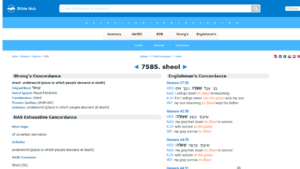
Jonah was in the place of the dead when he called to the LORD. While his physical bodily location was stated as being in the fish, his state of being was actually dead.
Therefore, it is reasonable to assume Jonah was now dead and so the prayer that Jonah is stated to have prayed is both retrospective and metaphorical
.
The following 4 verses are descriptive of death.
Jonah 2: 3For thou hadst cast me into the deep, in the midst of the seas; and the floods compassed me about: all thy billows and thy waves passed over me.
4 Then I said, I am cast out of thy sight; yet I will look again toward thy holy temple.
5The waters compassed me about, even to the soul: the depth closed me round about, the weeds were wrapped about my head.
Notice that in verse 3 Jonah makes a number of statements regarding the water and sea “cast me into the deep” and also “in the midst of the seas”. “the floods compassed me” and finally “thy waves passed over me”.
Remember that Jonah had been cast over the side of the boat and into the sea to die.
Jonah 1: 15 So they took up Jonah, and cast him forth into the sea: and the sea ceased from her raging.
It is then, entirely possible, that Jonah had died through drowning before he had then been swallowed by the whale.
The water compassed up to his soul the waters had gone beyond the physical body to his soul, metaphorically indicating that the water had passed into death encompassing his soul. The weeds (in the water) had wrapped themselves around Jonah’s head.
Verse 6 is another strong verse that indicated death.
Jonah 2:6 I went down to the bottoms of the mountains; the earth with her bars was about me for ever: yet hast thou brought up my life from corruption, O LORD my God.
Here, the bottoms of the mountains indicate death, sheol, not a physical location in the whales stomach. The term, the bars of the earth, although not specified as being the gates of Hell, is language that is often associated with going to the place of death.
Job 38:17 Have the gates of death been opened unto thee? or hast thou seen the doors of the shadow of death?
Psalm 107:18 Their soul abhorreth all manner of meat; and they draw near unto the gates of death.
Isaiah 38:10 I said in the cutting off of my days, I shall go to the gates of the grave: I am deprived of the residue of my years.
Jonah states that his life was brought up from corruption. Other translations render this from the pit
Jonah 2:6 “I descended to the base of the mountains. The earth with its bars was around me forever, But You have brought up my life from the pit, LORD my God.
Jonah states that his soul fainted within him.
Jonah 2:7 When my soul fainted within me I remembered the LORD: and my prayer came in unto thee, into thine holy temple.
It is at least plausible that Jonah’s life was brought up from corruption, from death.
Now obviously the main argument against this is that the dead do not pray. They know nothing as stated by the Bible itself.
Psalm 115:7 The dead praise not the LORD, neither any that go down into silence.
Ecclesiastes 9:5 For the living know that they shall die: but the dead know not any thing, neither have they any more a reward; for the memory of them is forgotten.
I am 100% in agreement with this, I do not believe that dead people pray. Jonah most certainly did not literally pray to God from the state of being dead. If Jonah was dead, as I believe him to have been, he did not pray to God when he was dead.
My understanding of the prayer is not that he literally prayed from death, but it is simply metaphorical.
We must note the PAST tense of Jonah’s prayer from Hell. Jonah is not actually praying from Hell he states that he prayed. As stated already this is Jonah recalling the story after the event, after his resurrection from the dead/
I personally believe that Jonah is using figurative language. He didn’t actually pray from Hell. He was dead. Jonah is speaking as a person that was dead and had been raised from the dead he is talking while he was alive having been brought back from the dead, as if he had prayed and that God had heard him. Simple figurative language.
As we saw in verse 7 Jonah states that his life had been brought up from corruption/the pit. Yet in verse 10 it is stated that Jonah was vomited up by the whale.
Jonah 2: 10 And the LORD spake unto the fish, and it vomited out Jonah upon the dry land.
It would seem that these are two distinct actions. If Jonah was alive in the whale and being brought out of the whales belly is being brought up from corruption then the two would actually be the same action. It would be the vomiting unto dry land of Jonah by the whale that was bringing him back from corruption, yet the text would seem to indicate that the bringing up from corruption was a separate act performed by God prior to the whale bringing up Jonah. Therefore, the bringing up from corruption would better suit a resurrection and then Jonah, who was now resurrected within the whale was brought up onto dry land.
Furthermore, in verse 7 it states that when Jonah’s soul fainted in him he remembered the Lord and the prayer come to God.
Jonah 2:7 When my soul fainted within me I remembered the LORD: and my prayer came in unto thee, into thine holy temple.
So it is also possible that Jonah prayed as he was dying and he is stating that his prayer was received by God as he died now being in sheol.
It will often be pointed out that similar language is also utilised by David in the Psalms.
Psalm 18:4 The sorrows of death compassed me, and the floods of ungodly men made me afraid. 5 The sorrows of hell compassed me about: the snares of death prevented me.
Psalm 8:13 For great is thy mercy toward me: and thou hast delivered my soul from the lowest hell.
Psalm 116:3 The sorrows of death compassed me, and the pains of hell gat hold upon me: I found trouble and sorrow. 4 Then called I upon the name of the LORD; O LORD, I beseech thee, deliver my soul.5 Gracious is the LORD, and righteous; yea, our God is merciful. 6 The LORD preserveth the simple: I was brought low, and he helped me. 7 Return unto thy rest, O my soul; for the LORD hath dealt bountifully with thee. 8 For thou hast delivered my soul from death, mine eyes from tears, and my feet from falling.
Obviously we know that David did not die. We must also understand that the poetic style that the Psalms are written in.
It must be noted that these Psalms do not state that David was in Sheol unlike the reference to Jonah in Jonah 2:2.
Now as I have stated I don’t actually think that we can get a definitive 100% conclusive answer as the Bible does not specifically say. I am not going to in this instance say that my interpretation is correct and that someone who believes Jonah was alive is incorrect. This is simply my own opinion based on the text and theological understanding. I think that the language used supports the understanding that Jonah was dead and not alive.
In chapter 3 we see the word of the LORD come again to Jonah, here Jonah is told to ARISE.
Jonah 3:2 Arise, go unto Nineveh, that great city, and preach unto it the preaching that I bid thee.
The Hebrew word for arise is Qum. This is the same word that Jesus used when he raised the daughter of Jairus when he told her to arise.
Mark 5:41 And he took the damsel by the hand, and said unto her, Talitha cumi; which is, being interpreted, Damsel, I say unto thee, arise.
It also makes more sense, to me at least, theologically that Jonah died. As I stated, there is no theological reason that Jonah had to have remained alive. However, his being dead would better align with the use of this story by Jesus , the sign that Jesus said would be given and his comparison between himself and Jonah.
Jesus and the sign
Jesus stated that just as Jonah was inside the belly of the (whale) so would Jesus spend 3 days and 3 nights inside the heart of the earth.
Matthew 12:39 But he answered and said unto them, An evil and adulterous generation seeketh after a sign; and there shall no sign be given to it, but the sign of the prophet Jonas: 40For as Jonas was three days and three nights in the whale’s belly; so shall the Son of man be three days and three nights in the heart of the earth.
The understanding that Jonah was alive HAS been used against Christians by Muslims who, trying to prove that Jesus did not die as they believe, use this comparison to show that Jesus did not die but remained alive for the 3 days and nights as they believe. JUST AS Jonah was in the belly of the whale (ALIVE) that Jesus was in the tomb (ALIVE) for 3 days and 3 nights.
So we see that insisting that Jonah was alive rather than dead has opened the door to this attack on the biblical narrative and the death and resurrection of Jesus.
Now, the obvious rebuttal to this is that Jesus was referring to the time scale and not about the condition that Jesus would be in. Jesus was going to be in the heart of the earth for 3 days and nights just like Jonah was 3 days and nights and it is this period of time that Jesus is comparing. If Jonah was alive and not dead then it is only the time frame that Jesus is utilising and not the state in which Jonah was during those 3 days and nights. This most certainly does answer the Muslims claim as clearly makes no reference to state of Jonah’s condition but directly references the period of time.
If Jonah was dead, as I believe he was, then the need to assert Jesus was referring to the time scale ONLY and the claim of the Muslim that just as Jonah was alive Jesus was alive simply evaporates into thin air.
Jonah died, was then entombed in the whale for 3 days and nights, resurrected and then exited the tomb. A perfect symbolic resemblance to Jesus, just as Jesus had stated.
Jesus explicitly states AS Jonah was. The Greek word here is ὥσπερ hósper, this means just like, even as. This particular statement is not in reference to a time frame but a state of being. Jesus doesn’t state as long as Jonah but as Jonah. Neither is this a reference to where Jonah was, Jesus does not state where Jonah was. Jesus says AS Jonah was, so shall the son of man. Condition, not time or place. Jonah being dead just as Jesus was dead. Their state was the same for the 3 days and 3 nights.
So based on the language that Jonah used in his description of his prayer, and the fact that it better aligns with Jesus death and resurrection after spending 3 days and 3 nights in the heart of the earth I believe that Jonah did in fact die in the whale’s belly and was then resurrected by God.
If you liked this study please subscribe here
You can buy my books on Amazon there is a link here
Help me keep this site free for all. Join our Patreon membership here
here
0 Comments